Marketplaces and platforms
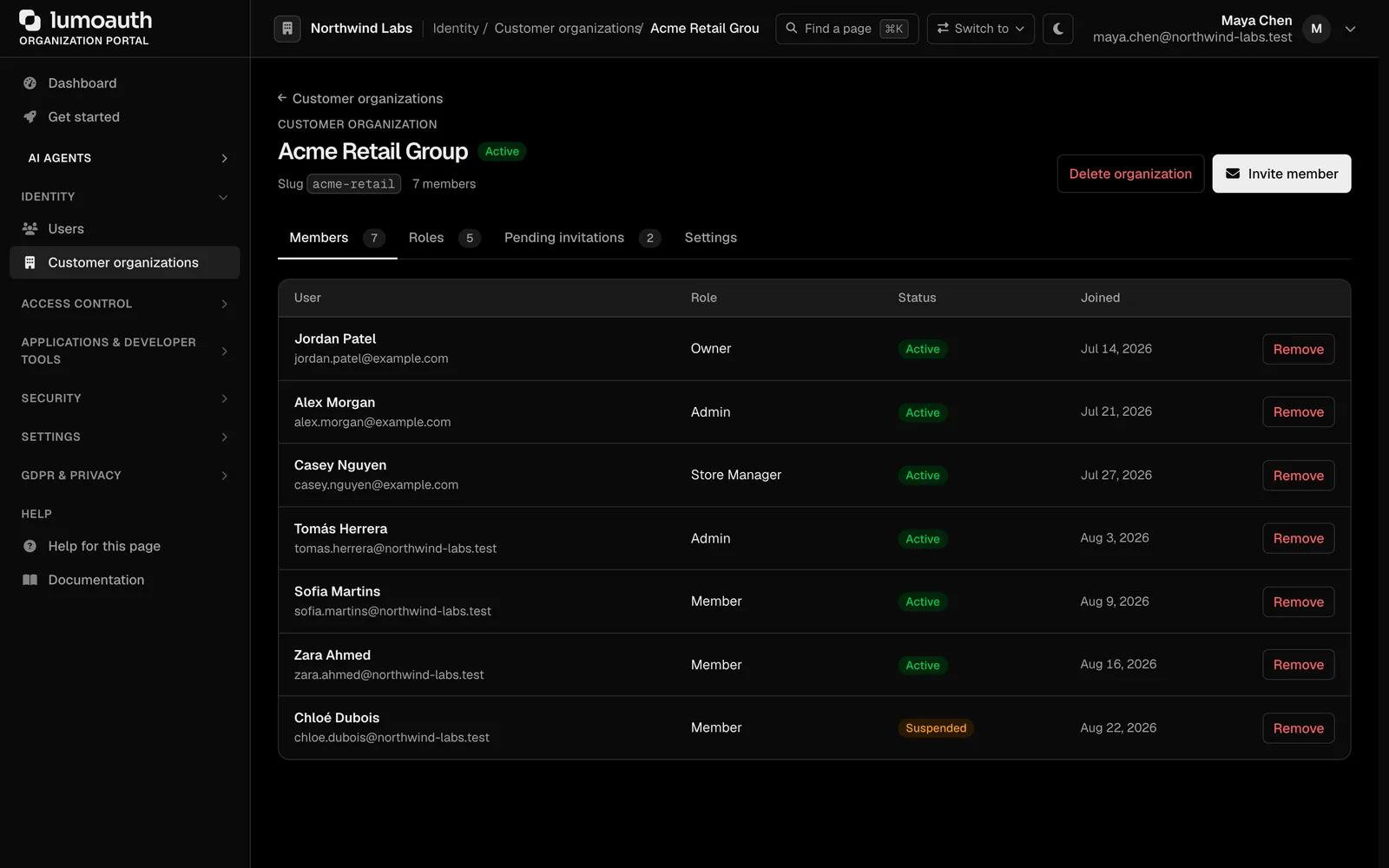
A marketplace has at least three kinds of users and each vendor behaves like a small B2B customer. LumoAuth models all of them in one organization structure with per-vendor branding, roles that differ by side, and webhooks for the events your business logic needs.
Vendors want their own sign-in; buyers want none at all
Vendor staff need roles and invitations. Buyers need one tap. Operators need to see both without becoming a bottleneck.
How LumoAuth solves it
Sides as organizations
Each vendor is an organization with its own admins; buyers live in the consumer organization. Docs
Vendor onboarding
Invitations, progressive profiling for business details, webhooks to trigger KYC. Docs
Per-vendor branding and domains
A vendor's staff sign in on a page that carries their brand. Docs
Marketplace-wide and per-vendor roles
Operator roles across the platform; vendor roles inside each vendor. Docs
Fraud at sign-up and at transaction time
Risk scoring, device fingerprinting and step-up for high-value actions. Docs
Events
Webhooks for users, organizations, consents and sign-ins. Docs
Setting it up
Create the operator and consumer organizations
Automate vendor organization creation from your onboarding flow
Subscribe to webhooks
Standards involved
Plain names on the left, the specification on the right. The full map is in the standards reference.
- Sign-in
- OpenID Connect
- Authorization API
- OpenID AuthZEN
Which plan you need
Organizations are on every plan with published per-organization overage. The vendor self-service portal is an add-on on Pro and included in Business.
Documentation
Ship passwordless sign-in this week. Put guardrails on your agents today.
The Developer plan is free for 10,000 monthly users and ten agents, with no card. Everything speaks open standards, so moving in or out is a config change.